

[Approach]
Why do schools choose NATURE?
Stronger class groups
Learning does not only happen in the head. Students also learn through their relationships with others.
When students take on challenges together, group processes become visible: who takes initiative, who waits and observes, who connects people, who steps back, who takes care of others?
These experiences make cooperation, communication and relationships tangible and easier to talk about.
At NATURE, students get opportunities to:
- really get to know each other,
- build mutual trust,
- practise cooperation,
- take responsibility,
- deal with differences,
- and experience what it means to contribute to a group.
For schools, this means investing in a class climate where students feel more connected, where relationships are strengthened and where teachers gain new insight into how the group functions.
We believe that when students feel safe and connected within their class group, they are also in a stronger position to learn.
Space for every student to grow
We work in an appreciative and process-oriented way. This means that we start from students’ strengths, possibilities and opportunities for growth.
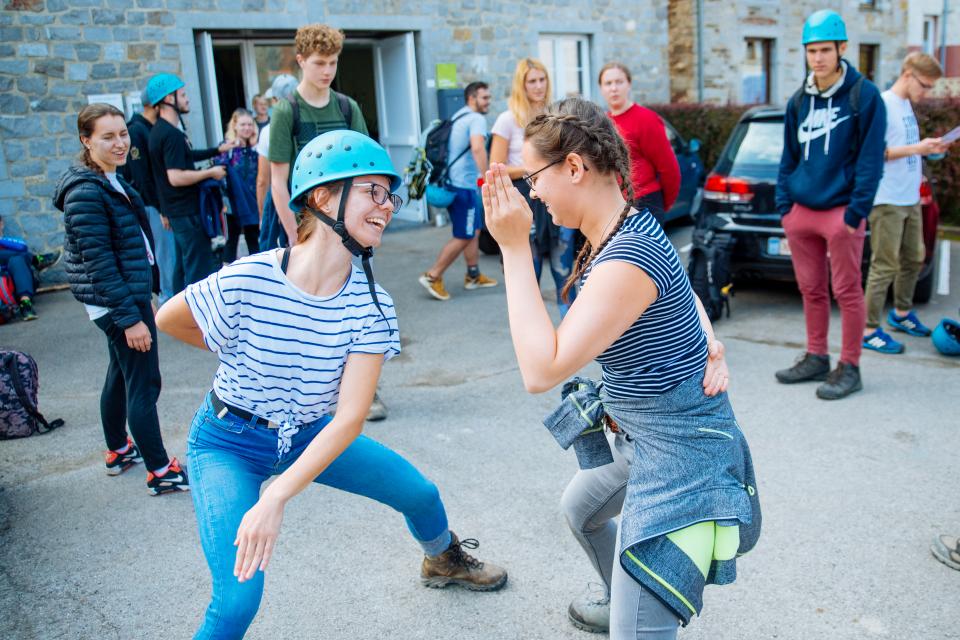
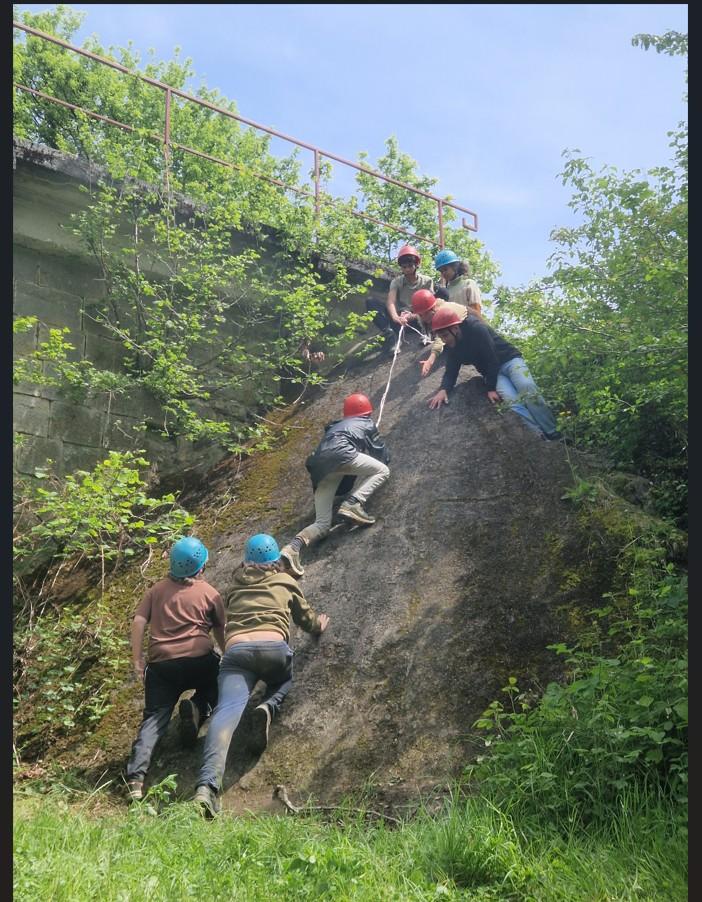
We acknowledge that every student's experience might be different. For one student, abseiling down a rock face may be a real achievement. For another, setting a boundary or daring to decide not to abseil may be an equally important step.
We create opportunities for students to:
- make conscious choices,
- build confidence,
- recognise and communicate boundaries,
- take responsibility,
- and experience ownership over their actions.
For schools, this creates a learning environment in which different personalities and abilities can find a place, without expecting every student to respond in the same way.
Experiential learning that makes social skills real
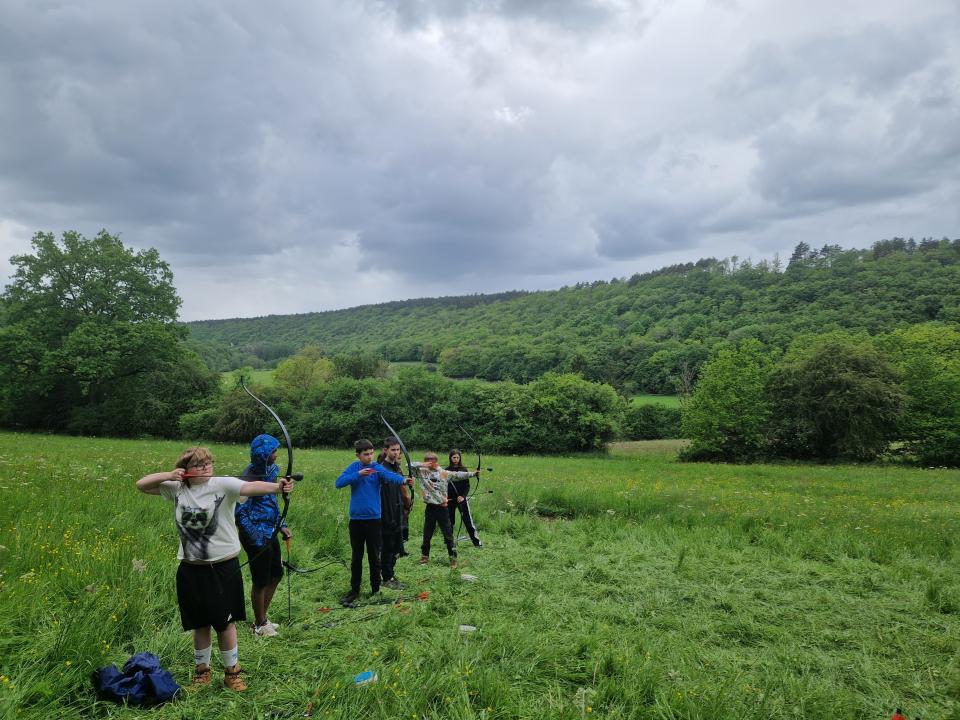
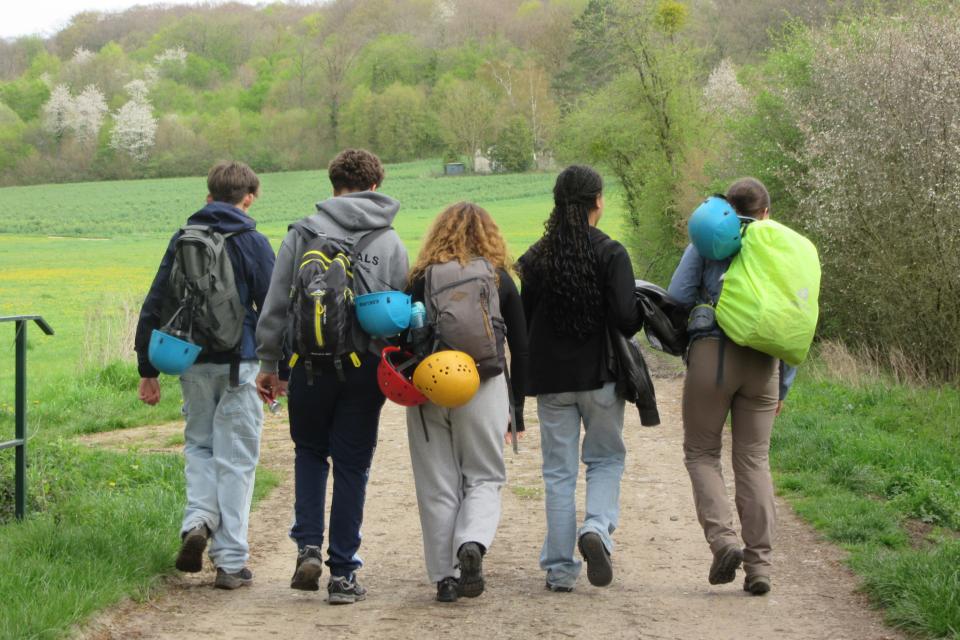
Our approach is rooted in Adventure Education and experiential learning. Outdoor activities are never a goal in themselves. We use adventure and nature as a context in which students can practise things that are difficult to develop through explanation alone.
A climbing activity, a hike or a group challenge can make themes such as:
- trust,
- perseverance,
- communication,
- frustration,
- leadership,
- cooperation,
- caring for others,
- and decision-making
visible and concrete.
Students do not only talk about these skills. They actually need to use them. Our facilitators help students reflect on what happened and connect the experience to their own behaviour and the group.
For teachers, these situations can also offer valuable observations and new starting points for conversations back at school.
Challenge in a safe setting
Challenge only works when students feel safe.
That is why we combine:
- adventurous activities,
- professional facilitation,
- attention to group dynamics,
- and care for psychological safety.
Students are allowed to try, hesitate, fail, adjust and try again. Every student has a place in the group and opportunities to participate at their own pace.
For schools, this means students can experience manageable challenge in a setting where both physical and emotional safety are taken seriously.
The outdoors creates a different learning environment
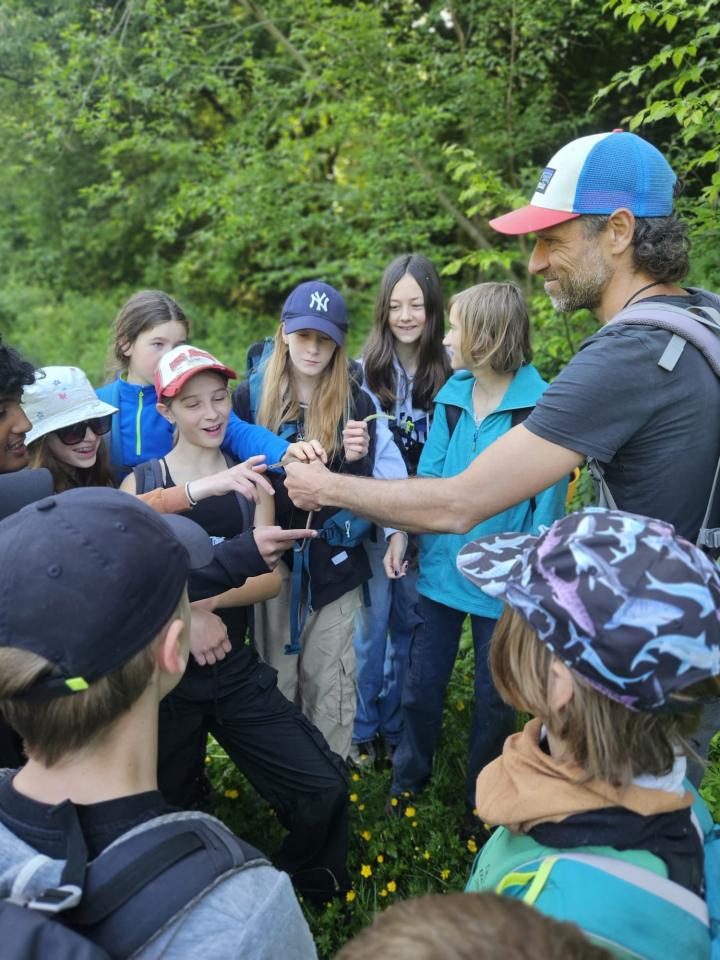
Nature slows things down. Away from screens, time pressure and daily routines, space opens up for:
- attention,
- real connection,
- movement,
- calm,
- wonder,
- and shared experiences.
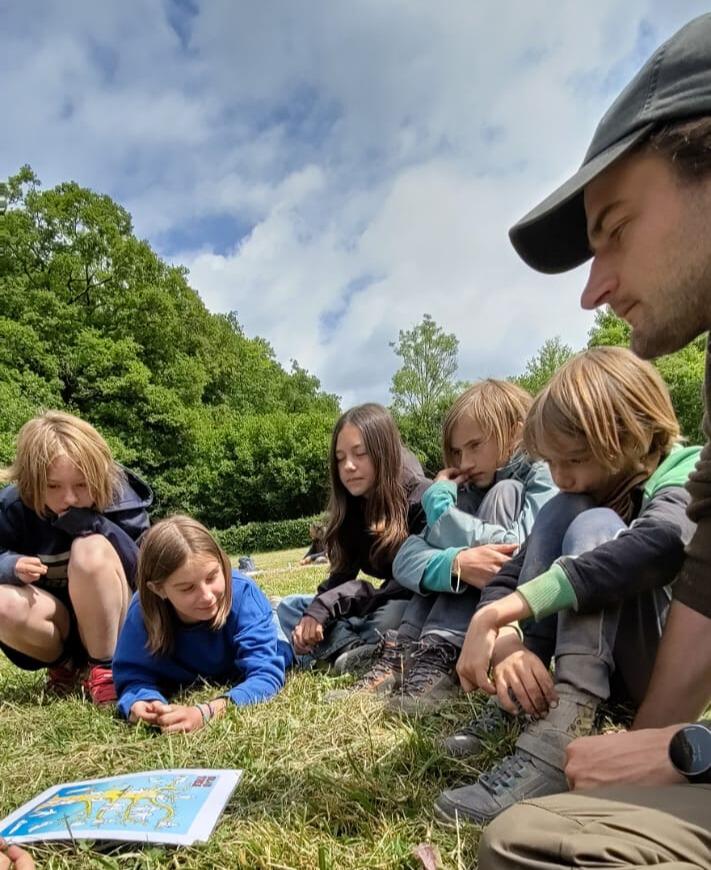
Being outside changes the context in which students meet each other. Familiar classroom roles can temporarily shift, different strengths can become visible and there is more space for informal contact.
For schools, this creates a valuable complement to classroom learning: a setting in which students can connect, move, reset and experience themselves and their classmates in a different way.